
Aluminised fabric is used in high-temperature working environments where personnel, equipment or thermal insulation components may be exposed to radiant heat, sparks, flames, hot surfaces or molten metal splashes. It can be used in firefighter approach suits, welding aprons, heat-resistant gloves, sleeves, protective jackets, fire blankets, pipe insulation, robotic protective covers and industrial thermal shields.
This fabric consists of a heat-resistant base fabric laminated or coated with an aluminised reflective layer. The aluminised surface reflects radiant heat, whilst the base fabric provides strength, flame retardancy, dimensional stability and abrasion resistance. Common base fabrics include para-aramid, meta-aramid, pre-oxidised fibres, glass fibre, rayon, carbon fibre and blended fabrics.
Tradsark supplies aluminised fabric under the TS Series, including aluminised aramid fabric, aluminised glass fibre fabric, and other aluminised composite fabrics for PPE, thermal insulation and industrial high-temperature shielding.
What Is Aluminized Fabric?
Aluminised fabric is a composite textile material produced by laminating or coating a heat-resistant base fabric with an aluminised reflective layer. The aluminised surface reflects radiant heat, whilst the base fabric provides mechanical strength and flame-retardant properties.
Different types of aluminised fabric are suitable for different applications. Lightweight aramid-based aluminised fabrics used for gloves differ from the heavier-duty fabrics used for jackets or aprons. Aluminised fibreglass fabrics used for heat shields also differ from aluminised aramid fabrics used for wearable protective clothing.
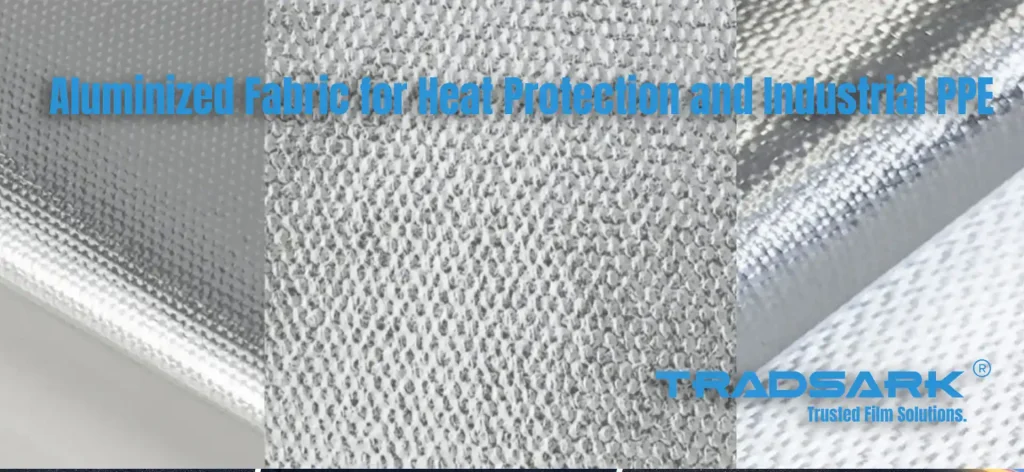
Most aluminised fabrics have a similar silvery surface, as shown in the photographs. Before placing an order, buyers should confirm the base fabric fibre type, weight, width, adhesion of the aluminium layer, flexibility, flame-retardant performance, heat resistance requirements, and the test reports available.
How Aluminized Fabric Works
Radiant heat is a common hazard in steelworks, foundries, welding shops, glassworks, petrochemical facilities, boiler rooms and fire and rescue environments. Personnel or equipment may come into close proximity to furnaces, molten metal, welding sparks, hot pipes or high-temperature machinery.
The aluminised surface reflects radiant heat away from the protected side. The base fabric supports the material structure and influences strength, flexibility, flame retardancy and abrasion resistance.
For PPE, fabric performance is only one aspect of the final product. Garment design, linings, stitching, fastening systems, gloves, boots, face shields and certification all influence the final level of protection. For industrial insulation, buyers should also consider installation methods, bending, surface friction, moisture, oil contamination and prolonged exposure to heat.
Main Types of Aluminized Fabric in the TS Series
Aluminized Aramid Fabric
Aluminised aramid fabric is used for the outer layers of protective clothing, welding PPE, sleeves, gloves and firefighter approach suits. The aramid fibres provide strength, flame resistance and abrasion resistance, whilst the aluminised surface reflects radiant heat.
This type is typically used in products that require both flexibility and thermal protection.
Aluminized Fiberglass Fabric
Aluminised glass fibre fabric is used for industrial insulation, fire blankets, furnace curtains, pipe covers, smoke barriers, welding shields and heat shields. The glass fibre provides thermal stability, whilst the aluminised surface reflects radiant heat.
This type is used more for equipment protection and insulation covers than for close-fitting garments.
Aluminized Aramid Blend Fabric
Aramid blended with pre-oxidised fibres, basalt fibres, glass fibres or other fibres can be used for aprons, long coats, gloves, sleeves, industrial PPE and thermal shields. The final choice depends on weight, flexibility, abrasion resistance requirements, thermal exposure conditions and testing requirements.
Aluminized Carbon / Pre-Oxidized Fiber Fabric
Blends of carbon fibre and pre-oxidised fibre can be used in certain heat-resistant and flame-retardant textile structures. These fabrics are suitable for applications requiring specific thermal stability, charring behaviour or specialised fabric properties.
Technical Specification Table: Tradsark TS Aluminized Fabric Series
The table below presents the standard specification format for TS aluminised composite fabrics. Final values should be subject to actual product specifications and available test reports.
| Property | TS-ALU-300 | TS-ALU-460 | TS-ALU-GLASS | Test Method |
|---|---|---|---|---|
| Weight | 300 gsm ±10 | 460 gsm ±15 | 380 gsm ±12 | ISO 3801 |
| Radiant Heat Reflectivity | ≥95% | ≥95% | ≥93% | ASTM E408 |
| Radiant Heat Performance | RPP >25 | RPP >30 | RPP >22 | NFPA 1976 |
| Flame Resistance | Pass | Pass | Pass | EN 532 / buyer-required method |
| Shrinkage @ 260°C | <5% | <4% | <6% | ISO 3759 |
| Tensile Strength | >800 N | >1,200 N | >900 N | ISO 13934-1 |
| Suggested Use | Proximity garment outer layer, gloves, sleeves | Heavier PPE, jackets, aprons, high-heat workwear | Industrial PPE, heat shields, insulation covers | — |
Note: Test values, certification levels and end-use applications depend on the actual fabric construction, coating process, test reports and final product design.
Applications of Aluminized Fabric
Fire Proximity Garments
Aluminised fabric can be used as the outer layer material for firefighter approach suits. The reflective surface serves to reduce the absorption of radiant heat, whilst the base fabric provides flame resistance and strength.
For this application, buyers should confirm the requirements for the complete garment, rather than just the fabric itself. The final product may include linings, face shields, hoods, gloves, boots and a garment construction that meets certification requirements.
Welding Aprons, Gloves and Sleeves
Welding operations may involve sparks, radiant heat and contact with hot metal. Aluminised fabric can be used for welding aprons, gloves, sleeves, welding curtains and protective covers.
For wearable products, flexibility and abrasion resistance should be assessed. Fabrics intended for furnace curtains may be too stiff and unsuitable for gloves or sleeves.
Molten Metal Splash Protection
In foundries, steelworks and aluminium processing sites, aluminised fabric can be used to manufacture jackets, aprons, hoods, gloves, sleeves and leg guards.
For molten metal applications, buyers should confirm the metal type, splash risk, exposure time and garment design. Not every type of aluminised fabric is suitable for protection against molten metal splashes.
Industrial Heat Shielding
Aluminised fabric can be used for pipe insulation, removable insulation sleeves, furnace curtains, fire blankets, welding curtains, equipment covers and thermal shields.
In these applications, the primary considerations are typically aluminium coating adhesion, fabric thickness, abrasion resistance, cut-to-size performance, roll width and installation methods.
Robot Protection Covers
Welding robots and high-temperature industrial robots may require fabric protective covers to shield cables, joints and external surfaces, reducing the impact of sparks, radiant heat and spatter.
For this application, flexural performance, aluminium coating adhesion and abrasion resistance should be assessed.
How to Choose the Right Aluminized Fabric
The first step is to confirm the end use.
For PPE applications, buyers should assess flame retardancy, radiant heat performance, flexibility, abrasion resistance, sewability and certification requirements.
For welding products, buyers should assess resistance to sparks, folding, abrasion, surface durability and cut resistance.
For protection against molten metal splashes, buyers should confirm molten metal test requirements and the final garment design.
For heat shields or thermal barriers, buyers should check aluminium coating adhesion, thickness, heat exposure, roll width and installation method.
For robotic protective covers, repeated movement and surface friction should be considered.
Selection cannot be based on grammage alone. The performance of 300 gsm aluminised aramid fabric and 300 gsm aluminised glass fibre fabric may differ. Composition, structure and test data should be cross-checked together.
What Buyers Should Confirm Before Ordering
Before purchasing aluminised fabric, buyers should provide clear information. This helps to minimise issues such as incorrect material selection and discrepancies between samples and bulk orders.
To expedite quotation, please provide the end use, heat source, potential exposure to flames or molten metal, required weight and width, base fabric preference, target standards, flexibility or abrasion resistance requirements, roll length, packaging method, target market, sample requirements and estimated order quantity.
For PPE, buyers should also confirm whether the fabric is to be used solely as an outer layer or as part of a multi-layer garment system. For industrial insulation, drawings or photographs of the equipment to be protected will help confirm the fabric width, coating orientation and installation method.
Common Purchasing Mistakes
Treating All Silver Fabrics as the Same
Many aluminised fabrics appear similar in product photographs; the real differences lie in the base fabric, aluminium coating adhesion, weight, reflectivity, flame-retardant performance and durability.
Ignoring Coating Adhesion
The aluminium coating must remain adhered during bending, friction, cutting and sewing. If the surface peels or cracks prematurely, the reflective performance against radiant heat may deteriorate during use.
Using Insulation Fabric for Wearable PPE
Industrial insulation fabric may be too stiff for clothing. PPE fabrics require flexibility, abrasion resistance and properties suitable for garment manufacturing.
Using General Fabric for Molten Splash
Molten metal splashes require separate assessment. Buyers should not assume that every type of aluminised fabric is suitable for foundry protective clothing.
Accepting Unmatched Test Reports
Test reports must correspond to the actual fabric structure, weight and coating system. A test report for one product should not be applied directly to a different fabric.
Supplier Evaluation Table for Aluminized Fabric Buyers
| Evaluation Item | What Buyers Should Check | Why It Matters |
|---|---|---|
| Product Structure | Base fabric, aluminized layer, coating or lamination method | Structure affects heat reflection, flexibility, flame resistance and durability |
| Test Reports | EN, ASTM, ISO or buyer-required reports | Reports should match the actual fabric being ordered |
| Coating Adhesion | Peeling, rubbing and bending resistance | Poor adhesion may reduce radiant heat reflection during use |
| Fabric Weight & Width | gsm, tolerance, roll width and roll length | Important for cutting, garment production and cost calculation |
| Heat Protection Use | Proximity garment, welding apron, gloves, insulation cover or robot cover | Different uses require different fabric structures |
| Customization | Weight, width, base fabric, coating, packing and roll size | Useful for OEM protective clothing and insulation projects |
| Documentation | TDS, test report, MSDS, invoice, packing list and certificates if required | Helps reduce quality, customs and compliance risk |
| Sample Testing | Trial cutting, sewing, bending, rubbing and production test | Helps confirm whether the fabric works in production |
Why Aluminized Fabric Selection Matters
Aluminised fabric is commonly used in safety and protective products. Some fabrics may appear suitable in photographs, but their performance may differ when exposed to heat, bending, friction or contact with molten metal splashes.
Buyers should not simply compare prices per metre. A comprehensive quotation should include the fabric’s construction, composition, weight, width, heat resistance, coating quality, test reports and sample testing.
Tradsark TS Series aluminised fabric is suitable for PPE, industrial insulation and high-temperature shielding applications. The final fabric should be selected based on its intended use and testing requirements, rather than solely on its surface appearance.
Material Selection Notes
Aluminised fabric can be used for radiant heat protection, flame-retardant clothing, welding protection, protection against molten metal splashes, industrial insulation, fire blankets, robotic protective covers and equipment insulation screens.
The appropriate fabric depends on the actual working environment. The base fabric, weight, adhesion of the aluminium coating, heat exposure conditions, abrasion resistance, flexibility, risk of molten metal splashes and testing requirements will all influence the final choice.
Before placing an order, buyers should confirm the application scenario, required standards, fabric construction, test reports, sample performance and bulk order requirements. The silver surface is merely the most visible aspect of the fabric; what matters more is whether the material is suitable for the final operating conditions.
