
Aluminized fabric for firefighter proximity suits by Tradsark – high reflectivity radiant heat reflective composite fabric
In the high-risk world of personal protective equipment (PPE), few materials deliver the protective performance of aluminized fabric. This special composite material is designed to reflect up to 95% of radiant heat, forming the outer shell of firefighter proximity suits, industrial heat-resistant clothing, and molten metal splash protective clothing.
Whether you are a procurement manager for the fire department, an OEM building ARFF (Aircraft Rescue and Firefighting) ensembles, or an industrial safety officer protecting foundry workers, choosing the right aluminized fabric manufacturer and supplier is crucial.
This 2026 guide helps buyers cut through unclear supplier claims. We explore what aluminized fabric is, how it is manufactured, the international standards it must meet, and most importantly, which suppliers truly provide consistent quality, full compliance, and reliable global supply.
This guide highlights Tradsark New Materials (Weifang) Co., Ltd. as a Chinese manufacturer and supplier, providing high-quality aluminized polyester films and finished aluminized composite fabrics. Tradsark has over a decade of expertise in metalized film and lamination technology, combining cutting-edge vacuum metalization with strict quality control to serve PPE buyers, converters, and industrial safety product suppliers in overseas markets.
At the end of this guide, you will have a precise understanding of what to look for among aluminum coated fabric suppliers, how to compare technical specifications, and how to request competitive RFQs that meet your exact project needs.
What Is Aluminized Fabric? A Technical Overview
Aluminized fabric, also known as aluminized composite fabric or radiant heat reflective fabric, is a multi-layer engineered textile made by bonding a thin vacuum metalized aluminum layer to a high-performance base fabric.
The aluminum coating is typically applied to a polyester (PET) film substrate first, then laminated onto flame-retardant substrates such as aramid fabrics, fiberglass, or oxidized PAN fibers using high-temperature thermoplastic adhesive films.
The result is a flexible and lightweight shell that can reflect radiant heat while resisting flames, molten metal splashes, and short-term exposure to temperatures exceeding 1000 ° C (1832 ° F).
Unlike traditional flame-retardant fabrics that absorb heat, aluminum coated fabrics act as mirrors, reflecting heat energy off the wearer’s body. This reflective property makes it the gold standard for firefighter proximity suits, approach suits, and entry suits..
Key Construction Layers
Outer reflective layer:
Vacuum-metallized aluminized PET film, standalone reflective film, 0.025-0.05mm thick, reflectivity ≥ 95%.
Adhesive layer:
High temperature thermally activated thermoplastic adhesive film, with an activation range of 160-230 ° C.
Base fabric:
Flame retardant aramid, fiberglass or blended knitted/woven fabric, 300-600gsm.
Optional inner layer:
Moisture barrier, thermal insulation lining, and comfortable fabric for complete clothing assembly.
Tradsark’s aluminum coated polyester film is the core reflective component of many such structures, ensuring uniform aluminum deposition and excellent adhesion, and long-term durability in harsh environments.
Why Aluminized Fabrics Matter: Real-World Applications and Benefits
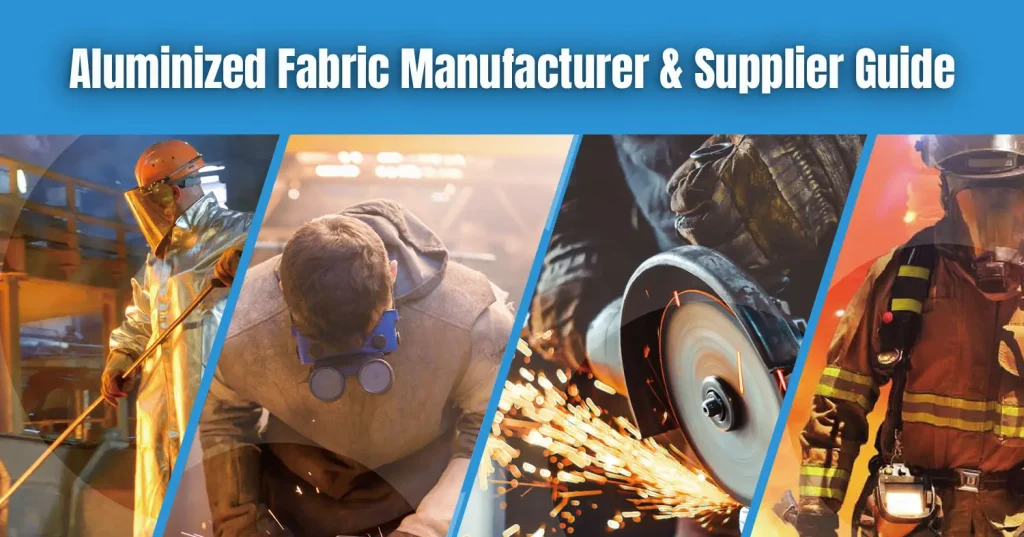
The main applications are firefighter proximity suits and ARFF protective clothing. These protective suits enable firefighters to perform tasks such as aircraft rescue, structural fire overhaul, or industrial accident response within a range of 1-2 meters of flames for a short period of time.
NFPA 1976 (USA, now included in NFPA 1971 for close range firefighting), EN 1486 (Europe), and GA634-2015 (China) standards specify the radiant heat protection performance (RPP) values that can only be reliably achieved with aluminized fabrics.
In addition to fire protection, aluminum coated fabrics can also protect workers in the following areas:
Foundries and smelters, where molten metal splash resistance may be required.
1) Welding and cutting operations.
2) Glass and ceramic manufacturing.
3) Petrochemical plants and refineries.
4) Military and aerospace thermal shielding.
Main advantages
- Excellent radiation heat reflection,>95% at typical wavelengths of fire.
- Compared to bulky non reflective alternatives, it is lightweight and comfortable.
- If constructed properly, durability under repeated bending and washing.
- Meets international bidding requirements.
- Buyers may reduce supply-chain complexity when sourcing from integrated manufacturers that control PET film metallization, lamination, and finished roll preparation.
Tradsark’s customer report states that due to precise aluminum thickness control and FR grade adhesive bonding, delamination can be prevented even after more than 50 washing cycles, resulting in a 20-30% increase in clothing lifespan compared to low-grade imported products.
Manufacturing process: from raw film to finished composite fabric
Understanding the production process helps buyers distinguish high-quality manufacturers from product suppliers.
- Vacuum metalization of PET film
High purity aluminum wire evaporates in a vacuum chamber and is deposited on a corona treated PET film in a continuous roll to roll process.
Tradsark operates the most advanced metallization equipment in Weifang, Shandong, achieving optical density (OD) values of 2.0-3.0 to achieve maximum reflectivity and minimal pinholes. - Preparation of adhesive film
High temperature thermoplastic adhesive films based on polyolefins or polyurethanes are extruded or coated to a precise thickness of 0.05-0.15 millimeters.
These films remain non sticky at room temperature, but activate at high temperatures and pressures. - Layering
Use a heated rolling roller or flat press to bond the metallized PET film to the base fabric at 160-230 ° C.
Pressure and dwell time are strictly controlled to ensure 100% adhesive strength without damaging the aluminum layer. - Precision machining and testing
The fabric undergoes flame retardant treatment (if necessary), edge sealing, and comprehensive testing: radiant heat, convective heat, flame propagation, shrinkage, and tensile strength.
Tradsark’s vertically integrated factory in Weifang allows for single source quality control – which many competitors outsource – resulting in stricter tolerances and faster delivery cycles, with custom orders typically taking 15-25 days.
International Standards Every Serious Buyer Must Know
Compliance is non-negotiable. Here is a quick-reference table of the three major standards:
| Standard | Region | Key Requirements | Radiant Heat Test | Typical Application |
|---|---|---|---|---|
| NFPA 1976 / 1971 | USA/Canada | Flame resistance, heat resistance, RPP ≥20 | 1.0 cal/cm²/s for 20 seconds minimum | Proximity suits, ARFF ensembles |
| EN 1486 | Europe | No melting/dripping, radiant heat >120 s at 40 kW/m² | Temperature rise <24 °C behind fabric | Firefighter reflective clothing |
| GA634-2015 | China | Damaged area ≤100 cm², thermal stability ≤10% shrink | >60 s at 40 kW/m² for <25 °C rise | Chinese firefighter insulating suits |
Tradsark can provide third-party test reports or certification documents according to product structure, order requirements, and target standards.
How to Choose a Reliable Aluminized Fabric Manufacturer and Supplier
Take a look at these seven non-negotiable standards:
- Vertical integration – Does the supplier produce their own metalized PET film?
- In-house lamination capability with calibrated equipment.
- Complete traceability from raw PET resin to finished roll.
- The third-party certification is updated once a year.
- Minimum order flexibility, Tradsark accepts trials of 500-1000 meters.
- Global export experience and REACH/RoHS compliance.
- Technical Support – Can they provide TPP/HTP data, sample packages, and customized lamination formulas?
Tradsark scores well on these points. They are located at the center of China’s film manufacturing corridor, exporting weekly to North America, Europe, and Southeast Asia.
Leading Aluminized Fabric Manufacturers and Suppliers in 2026
- Although the global market includes well-known brands, Chinese suppliers now play an important role in global aluminized fabric and metallized film supply. Here is an objective overview:
- Otego Textile-Premium Fireshield ® Series, compliant with the European EN 1486 standard. Very suitable for high-end close fitting suits.
- Newtex Industries-Z-Flex ® II aluminum coated fiberglass fabric, known for its lightweight performance.
- Fuliong Hi Tech Material Co., Ltd. has strong domestic and international strength in radiation heat resistant fabrics.
- Lakeland Fire+Safety – Complete set of clothing with aluminum plated casing; Pay more attention to clothing.
- Tradsark New Materials (Weifang) Co., Ltd. is a rising star specializing in the production of high reflectivity aluminum coated PET films and customized laminated composite materials. Competitive pricing, rapid prototyping, and comprehensive supply chain control make Tradsark the preferred partner for cost conscious original equipment manufacturers and distributors seeking pricing stability in 2026.
Tradsark stands out for buyers who require both independent reflective film and ready-made sewn composite fabrics, eliminating middlemen’s markup and quality differences.
Tradsark’s Aluminized Fabric Solutions
At Tradsark New Materials, we specialize in designing aluminum coated fabrics for firefighter proximity suits and industrial insulation. Our flagship product line includes:
- TS-ALU-300 Series – 300 gsm aluminized aramid knit fabric, dual certification of EN 1486 and NFPA 1976, reflectivity>95%.
- TS-ALU-460 series – heavy-duty 460gsm para aramid blend, suitable for entry-level clothing and molten metal splashes.
- TS-ALU-GLASS – a glass fiber based variant suitable for cost sensitive industrial applications.
- Custom laminates – any base fabric+Tradsark’s own vacuum metallized PET film+FR adhesive film.
All rolls have a width of 1.5 meters or 1.6 meters and can be treated with anti-static or high visibility options. The delivery cycle for standard specifications is 15 days; Customized colors or widths will be shipped within 25 days.
Technical Specifications Table: Tradsark Aluminized Composite Fabrics
| Property | TS-ALU-300 | TS-ALU-460 | TS-ALU-GLASS | Test Method |
|---|---|---|---|---|
| Weight (gsm) | 300 ±10 | 460 ±15 | 380 ±12 | ISO 3801 |
| Radiant Heat Reflectivity | ≥95% | ≥95% | ≥93% | ASTM E408 |
| Radiant Heat Performance | RPP >25 | RPP >30 | RPP >22 | NFPA 1976 |
| Flame Resistance | Pass | Pass | Pass | EN 532 |
| Shrinkage @ 260 °C | <5% | <4% | <6% | ISO 3759 |
| Tensile Strength (N) | >800 | >1,200 | >900 | ISO 13934-1 |
| Recommended Use | Proximity suits | Entry suits | Industrial PPE | — |
These values are independently verified; full test reports available upon RFQ.
Manufacturer Comparison Table
| Manufacturer | Vertical Integration | Key Strength | Typical MOQ | Lead Time | Best For |
|---|---|---|---|---|---|
| Tradsark (China) | Yes, film + laminate | Price/performance + speed | 500 m | 15–25 days | OEMs & distributors |
| Otego (FR/CN) | Partial | European certification | 1,000 m | 30–45 days | High-end EU tenders |
| Newtex (USA) | Yes | Lightweight Z-Flex tech | Higher | 45+ days | North American fire depts |
| Fuliong (China) | Yes | Domestic volume leader | 1,000 m | 20–30 days | Cost-sensitive projects |
Frequently Asked Questions
- Q1: What is the difference between aluminized fabric and metallized fabric?
- Aluminized fabrics use vacuum-deposited aluminum for true mirror reflection. Metallized fabrics typically use aluminum oxide or thinner coatings with lower reflectivity.
- Q2: How long does aluminized fabric last in proximity suits?
- With proper care, 3–5 years or 50–75 washes, depending on exposure frequency, depending on the frequency of contact.
- Q3: Can Tradsark only provide standalone reflective film?
- Yes, our aluminum coated PET film is sold separately for customers who laminate in-house.
- Q4: Do you offer small trial orders?
- Of course. The minimum trial order for most constructions is 200 meters..
- Q5: Does your material comply with REACH and RoHS standards?
- Yes, complete documents have been provided for each batch of goods.
Partnering with an Experienced Aluminized Fabric Manufacturer
In 2026, as fire departments and industries raise safety standards, the global demand for high-performance aluminized fabrics continues to grow. Choosing the right supplier means striking a balance between technological excellence, regulatory compliance, and total cost of ownership.
Tradsark New Materials (Weifang) Co., Ltd. provides this combination through vacuum metallized PET film, laminated composite fabrics, technical support, and export supply experience. From our own vacuum metalized PET film to finished composite fabrics certified by NFPA, EN, and GA standards, we offer you complete transparency, competitive pricing, and the technical partnerships needed to win bids and protect lives.
Are you ready to improve your PPE sourcing program? Contact our team today at WhatsApp: +86-190-0646-0458, or Email: tradsark@gmail.com
