When contractors and builders specify underfloor heating systems, the focus tends to land on the heat source—the cables, the pipes, or the electric heating film itself. But experienced installers know that the underfloor heating insulation film laid beneath those elements is just as important. Without this reflective barrier, heat escapes downward into the subfloor, wasting energy and slowing down room warm-up times.
In building applications, the heat insulation film serves a straightforward purpose: keep the warmth where it belongs. This thin, reflective layer is one of the simplest ways to improve system performance without adding complexity or significant cost.
What Is Underfloor Heating Insulation Film?
Simply put, a floor heating insulation film is a reflective sheet installed between the subfloor and the heating system. Its job is to bounce radiant heat upward, preventing it from being absorbed by concrete slabs or structural layers below.
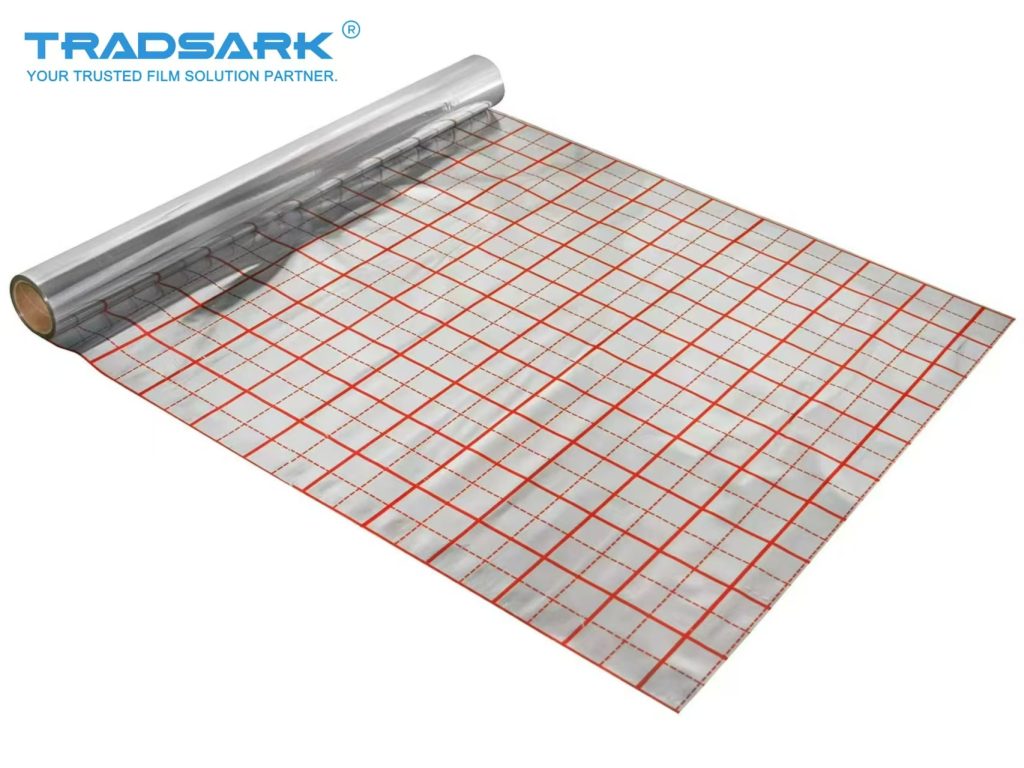
The heating reflective film typically features a shiny aluminum surface combined with protective backing materials. When heat radiates downward from the heating elements, this reflective surface catches it and sends it back toward the floor surface. The result is faster warm-up times and more efficient energy use.
How Thermal Insulation Film Works in Real-World Building Projects
The principle behind this thermal insulation film is simple physics. Heat naturally travels toward cooler areas. Without a barrier, warmth from your underfloor system moves downward into the subfloor, which acts as a heat sink. This means your system runs longer and works harder to reach the desired room temperature.
By placing a building insulation film beneath the heating layer, you create a thermal break. The reflective surface redirects heat upward, meaning more of the energy you pay for actually ends up warming the room above. For building owners, this translates into lower operational costs. For installers, it means a system that performs as expected.
Common Applications in Building Construction
While the name points to floors, this versatile aluminum reflective film finds use across several areas of building construction.
Electric Underfloor Heating Systems
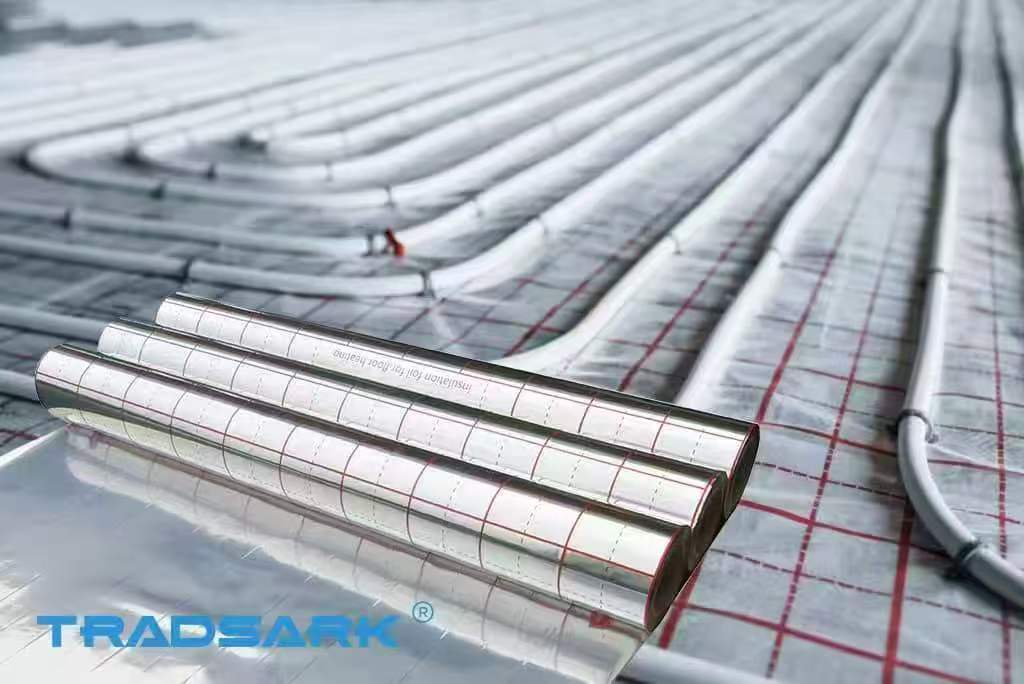
In electric installations—whether using cables or electric heating film—the insulation reflective film is laid directly onto the subfloor, with the heating elements placed on top. This configuration reduces the thermal mass that needs to be warmed, so the system reaches comfortable temperatures faster. This is especially valuable in renovation projects where quick response times are a priority.
Hydronic (Water-Based) Radiant Floors
For water pipe systems, grid films with printed patterns are often the preferred choice. These heating film products not only reflect heat upward but also provide visual guides for pipe layout. Installers appreciate this feature because it speeds up installation and helps maintain consistent spacing between pipes.
Roof and Wall Insulation
Beyond floor applications, aluminum reflective film is increasingly specified for roof and wall assemblies. In summer, it reflects solar radiation, reducing cooling loads. The same reflective principle that keeps winter heat inside also helps keep summer heat out, making it a year-round thermal insulation film solution for building envelopes.
What Matters When Sourcing Insulation Film
For international buyers, contractors, and distributors, selecting the right heating film manufacturer involves looking at several practical factors.
Reflectivity and Material Quality
The effectiveness of any heat insulation film comes down to its reflective surface. A well-made heating reflective film uses quality aluminum that maintains its reflectivity over time. Lower-grade materials can tarnish or corrode, especially when exposed to moisture or alkaline conditions commonly found in concrete screeds.
Durability and Resistance Properties
Installation environments can be tough on materials. Installers walk on the film, tools get dragged across it, and it may come into contact with wet concrete or adhesive. A reliable underfloor heating insulation film should resist punctures, tearing, and compression. It also needs to withstand alkaline conditions without degrading—a factor that separates durable products from those that fail within a few years.
Moisture Protection
In many building scenarios, the floor heating insulation film also serves as a moisture barrier, preventing ground dampness from rising into the floor structure. This dual function simplifies material selection for contractors, who can specify one product that handles both thermal reflection and vapor protection.
Customization for Different Market Needs
Different projects and different regions often require tailored specifications. A flexible heating film manufacturer should accommodate these variations without making the process complicated.
Grid Patterns for Easier Installation
Many contractors prefer grid films with pre-printed lines at regular intervals. These guides help with cable or pipe spacing, reducing installation errors and saving labor time. Custom grid designs based on installer feedback can make a real difference on the job site.
Roll Sizes and Thickness Options
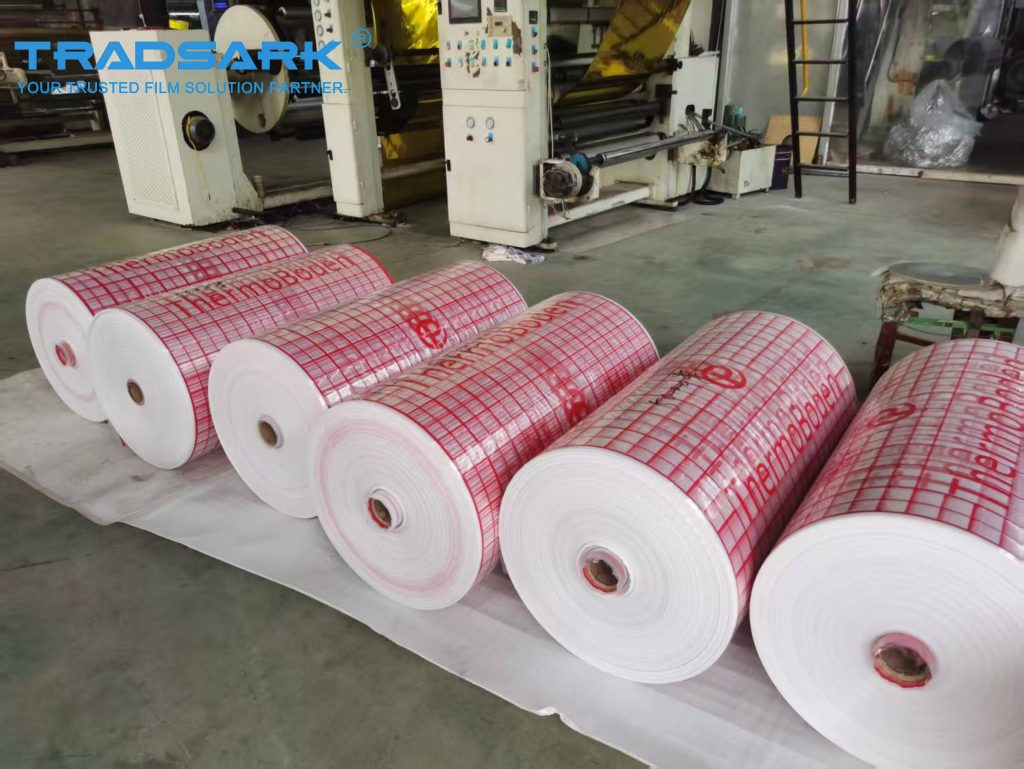
Large commercial projects may require wide rolls to minimize seams, while residential retrofits often work better with narrower widths. Thickness also varies depending on the application—some projects prioritize flexibility for uneven subfloors, while others need extra puncture resistance for heavy-duty use. A responsive heating film supplier offers a range of options.
Private-Label and OEM Support
Distributors building their own brand presence often need private-label packaging. This includes branded rolls, custom labels, and neutral outer cartons. Working with a heating film manufacturer that offers OEM services allows you to present the product as your own, strengthening your position in local markets.
Why Tradsark for Your Insulation Film Needs
For buyers looking for a practical, dependable partner in the aluminum reflective film space, Tradsark offers production capability and real-world flexibility.
Our Product Range
We manufacture several types of underfloor heating insulation film suitable for different building applications: · Aluminum Foil Coated PE Film: A versatile option combining effective heat reflection with moisture resistance. Suitable for most floor heating installations. · PET + AL + PE Composite: A three-layer construction that balances stability, heat reflection, and mechanical strength for demanding projects. · Aluminum Floor Heating Reflective Film: Featuring a mirror-finish reflective surface and corrosion-resistant construction, designed to last the life of the building.
Practical Customization
We offer customization options that actually matter on the job site: · Custom grid patterns for pipe or cable alignment. · Flexible roll widths and lengths to suit project scales. · Private-label packaging and branding support for distributors. · Technical documentation adapted to your local language needs.
Export Experience
With years of shipping heat insulation film to markets across Europe, Central Asia, and South America, we understand the practicalities of international logistics. Our team handles packing, palletizing, and documentation so your heating reflective film arrives ready to install.
Conclusion: Insulation Is the Foundation of Efficient Heating
The effectiveness of any underfloor heating system depends on what lies beneath it. Underfloor heating insulation film is not an optional extra—it is the layer that determines whether your system operates efficiently or wastes energy through the floor. For contractors, distributors, and building owners, choosing the right thermal insulation film is a decision that pays off every heating season.
Tradsark is here to help with practical products and straightforward support.