
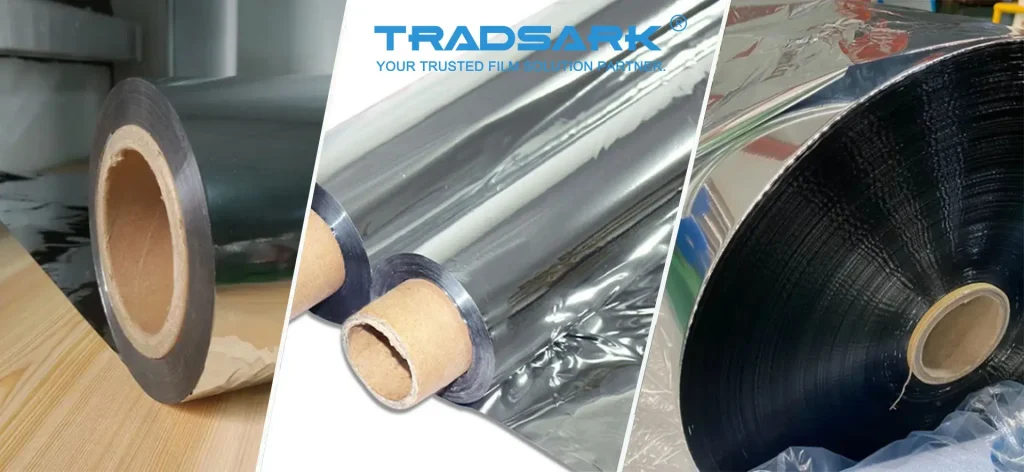
In modern apple production, fruit quality is no longer determined only by variety, fertilizer programs, pruning, irrigation, and harvest timing. Light management has become one of the most important tools in orchard quality control. Growers who focus on premium fruit color, better ripening uniformity, and stronger market value increasingly pay attention to one practical question: how can sunlight be distributed more effectively inside the orchard canopy?
This is where reflective film for apple orchards becomes highly relevant.
Reflective orchard film, often made from aluminized PE film or metallized agricultural film, is designed to redirect sunlight from the orchard floor back into the canopy. Instead of allowing light to disappear into soil, weeds, bare ground, or dark mulch, reflective ground cover returns light upward to the lower and inner parts of the tree. In apple orchards, this can make a visible difference in fruit coloration, sugar accumulation, ripening consistency, and overall pack-out quality.
For growers producing apples for fresh markets, visual quality matters. Fruit buyers, supermarket chains, wholesalers, and export customers do not assess apples only by size. Color development, skin brightness, maturity uniformity, and general appearance all influence grading and final selling price. Even when the fruit is healthy and the yield is good, poor light exposure can reduce color quality and lower commercial value. This is especially important in high-density orchards, vigorous canopies, or blocks where lower fruit often remains shaded.
Reflective agricultural film has become a practical solution in this context. It is not a fertilizer, not a pesticide, and not a complicated mechanical system. It is a simple orchard floor material designed to make better use of natural light. When selected and installed correctly, it can help growers improve fruit finish and make better use of the sunlight already available in the orchard.
This article explains how reflective film for apple orchards works, why growers use it, what materials are commonly available, how PE and PET reflective films compare, when installation makes the most sense, what common mistakes to avoid, and how reflective film compares with black mulch, white ground cover, and kaolin-based approaches. Rather than reading like a product brochure, this guide is written as a practical long-form article for growers, importers, agricultural material buyers, and orchard professionals who want a clearer understanding of this technology.
Why Light Distribution Matters So Much in Apple Orchards
Apple trees do not use sunlight evenly across the canopy. The top and outer parts of the tree generally receive strong direct light, while inner branches, lower fruit, and shaded leaf zones often receive much less. This uneven light environment can influence fruit quality in several ways.
The most obvious effect is fruit color. In red apple varieties, fruit in well-exposed canopy positions typically colors faster and more evenly than fruit deeper inside the tree. Lower fruit may remain pale, less attractive, or unevenly colored. In markets where skin color strongly affects grading, this becomes a direct commercial issue.
The second effect is ripening consistency. Light supports photosynthesis, and photosynthesis supports fruit development. When lower canopy zones receive insufficient light, fruit maturity may become less uniform across the tree. The grower may end up with blocks where some fruit is ready while other fruit still lags behind.
The third effect is sugar development and eating quality. Better light conditions generally support stronger leaf activity and better carbohydrate production. While many factors influence sweetness, poor canopy light distribution often reduces fruit quality potential.
This is why apple orchard managers increasingly think not only about total sunlight, but about light placement. An orchard may receive plenty of sunshine overall, yet still suffer from poor fruit color if the light never reaches the lower or inner fruiting zones. Reflective orchard film helps address this exact problem.
What Is Reflective Film for Apple Orchards?
Reflective film for apple orchards is a ground-applied agricultural film with a silver or mirror-like surface designed to reflect sunlight upward into the tree canopy. It is typically manufactured using a polymer substrate such as PE or PET, combined with a vacuum-deposited aluminum layer that gives the film its reflective performance.
The film is usually laid between tree rows or beneath the canopy during the critical period leading up to harvest. The reflective side faces upward, capturing sunlight and redirecting it toward fruit and leaves that would otherwise remain in shade.
This type of film may also be referred to by several related names, including:
- orchard reflective film
- reflective ground cover film
- agricultural reflective film
- aluminized PE film
- metallized agricultural film
- reflective mulch film for orchards
- reflective film for fruit color enhancement
Although the terminology varies from supplier to supplier, the practical idea remains the same: use a reflective orchard floor surface to improve canopy light conditions and support better fruit quality.
How Reflective Film Actually Works in the Orchard
Many orchard technologies sound complex in theory, but reflective film works through a very simple physical principle. Sunlight reaches the orchard floor every day. Without reflective material, much of that light is absorbed or scattered by the ground surface. If the ground is dark, dusty, grassy, or uneven, the light is effectively lost from the crop’s perspective.
A reflective film changes that.
When sunlight strikes a bright aluminized surface, a significant portion of the light is reflected upward. In orchards, this reflected light enters lower and interior canopy zones that would otherwise remain underlit. That additional light can reach fruit surfaces, spur leaves, and shaded branches, improving the light environment during a critical stage of fruit finishing.
This is especially useful in apple blocks with:
- dense canopies
- lower fruiting zones
- vigorous vegetative growth
- high-value color-dependent varieties
- narrow harvest windows
- commercial grading pressure
Reflective film does not replace good pruning, canopy management, or orchard design. It works best when integrated into a well-managed production system. But where color development is limited by uneven light, reflective film can help the orchard perform more consistently.
Why Apple Growers Use Reflective Film Before Harvest
In practice, many orchard managers do not install reflective film for the entire season. Instead, they apply it during the period when fruit color development becomes commercially important. This is one reason reflective film is so attractive: it can be used as a targeted quality-management tool rather than as a year-round infrastructure investment.
The pre-harvest period is often the stage when:
- fruit color becomes most visible
- market expectations become more important
- maturity variation becomes clearer
- growers want to maximize premium-grade fruit
At this stage, even a moderate improvement in fruit color or uniformity can affect returns. Better color may increase the percentage of fruit that meets high-grade specifications. More even maturity can simplify picking decisions. Improved appearance can strengthen acceptance in wholesale and export channels.
For some growers, reflective film is less about yield and more about value. If the orchard already has solid crop load and good fruit size, the next commercial question is often how to improve visual quality. Reflective film is one of the most practical tools for that purpose.
PE vs PET Reflective Film: What Is the Difference?
One issue that often confuses buyers is the difference between PE reflective film and PET reflective film. Both can be used in agricultural reflective applications, but they are not identical.
PE Reflective Film
PE, or polyethylene, is common in agricultural film because it is flexible, practical, and generally more economical. In orchard applications, PE-based reflective film is often easier to roll out, handle, and adapt to uneven ground conditions. It is a common choice for growers who want good reflective performance with practical field usability.
Typical reasons growers or distributors choose PE include:
- flexibility
- easier field handling
- cost efficiency
- good suitability for seasonal orchard use
- convenient roll production for large-area deployment
PET Reflective Film
PET, or polyethylene terephthalate, usually offers stronger dimensional stability and a different feel from PE. In reflective film systems, PET may be selected where higher structural consistency or a more rigid material profile is preferred. Some buyers like PET-based reflective films for certain performance characteristics, especially when surface stability matters.
Typical reasons buyers consider PET include:
- stronger dimensional stability
- a firmer film body
- different handling characteristics
- suitability for specialized reflective structures
Which One Is Better for Apple Orchards?
There is no universal answer. For many commercial orchard uses, PE reflective film is often the more practical option because of its flexibility, lower cost, and ease of installation. PET can be suitable where a more stable structure is needed or when the supplier’s design uses PET to achieve specific surface performance.
For buyers, the better question is not simply “Which is better, PE or PET?” but:
- What is my orchard layout?
- How long will the film remain in the field?
- How much wind or mechanical stress will it face?
- Am I buying for one season, multiple seasons, or distribution resale?
- Is easy handling more important than film rigidity?
In many cases, the right substrate depends more on practical field use than on theoretical material preference.
Main Benefits of Reflective Film in Apple Orchards
Improved Fruit Coloration
This is the first reason most growers consider reflective orchard film. Better reflected light helps more fruit surfaces receive exposure, especially in the lower and inner canopy. In red apple varieties, this often supports more even and attractive skin coloration.
More Uniform Ripening
Fruit in shaded zones tends to lag behind better-exposed fruit. By improving the light environment, reflective film helps reduce some of this unevenness, especially near harvest.
Better Light Use Without Adding Equipment
Reflective film uses natural sunlight more efficiently. It does not depend on electricity, complex machinery, or chemical application. It simply changes how the orchard floor interacts with light.
Stronger Pack-Out Potential
If more fruit reaches a higher visual grade, the orchard may improve its pack-out economics. Reflective film is often attractive because it can influence value, not just tonnage.
Support for Lower Canopy Function
Shaded leaves are less productive. Better reflected light can help lower leaves remain more active, supporting overall tree performance during the final stage of fruit development.
Practical Seasonal Use
Because reflective film can be installed before harvest rather than used all season long, it is more manageable for many orchards. This makes it a realistic quality tool rather than a permanent system change.
Reflective Film vs Black Mulch: What Is the Difference?
This is a very important comparison, because some growers confuse reflective orchard film with ordinary black agricultural mulch.
Black Mulch
Black mulch is typically used for:
- weed suppression
- soil warming
- moisture conservation
- clean field management
It is highly useful in many crop systems, especially vegetables and berries. But black mulch absorbs light rather than reflecting it back upward.
Reflective Film
Reflective orchard film is used for:
- light redistribution
- fruit color improvement
- canopy light enhancement
- quality-focused orchard management
So while both may be ground-applied films, they serve different purposes. In an apple orchard, black mulch may help with orchard floor management, but it does not offer the same canopy light benefit as a reflective aluminized film.
Some growers use different materials in different systems depending on the crop goal. But if the main target is better fruit color and improved reflected light, reflective orchard film is the more appropriate option.
Reflective Film vs White Ground Cover
White ground cover is another related category. White materials can reflect light, but they are generally not as reflective as a mirror-like aluminized surface. They may still be useful, especially in some specialty crop systems, but reflective orchard film with an aluminum metallized surface is usually chosen when the grower wants stronger light return.
White ground cover may be acceptable for general brightness improvement. Aluminized reflective film is generally selected when the objective is more aggressive fruit color enhancement and stronger reflected light performance.
Reflective Film vs Kaolin Spray
Some growers compare reflective ground film with kaolin or other reflective particle sprays. These two approaches are different.
Reflective Film
- applied on the ground
- redirects light upward
- improves lower canopy illumination
- supports fruit color and uniformity
Kaolin Spray
- applied to the tree or fruit surface
- often used to reduce heat stress or sunburn risk
- functions differently from reflective ground cover
- may influence fruit microclimate, but not in the same way as ground reflection
A grower choosing between the two should think about the production goal. If the main need is better canopy light distribution and fruit color improvement, reflective ground film is usually the more direct solution. If the problem is severe heat load or sunburn risk, particle sprays may enter the discussion for different reasons.
When Should Reflective Film Be Installed in an Apple Orchard?
Timing matters. Installing reflective film too early may increase handling risk and prolong exposure unnecessarily. Installing too late may reduce the quality benefit.
In most orchards, reflective film is used before harvest during the stage when fruit color development becomes important. This allows the grower to focus the film’s benefit on the fruit finishing period rather than leaving it exposed through the entire season.
Exact timing depends on:
- apple variety
- regional climate
- harvest schedule
- canopy density
- orchard management system
In practice, growers often evaluate when the block begins entering the fruit coloring stage, then install reflective film in time to support final color development.
What Specifications Matter Most to Buyers?
Many orchard articles talk about reflective film in general terms, but buyers usually need more practical information. These are the factors that often matter most:
Thickness
Typical agricultural reflective film thicknesses may range from around 15 µm to 30 µm. Thicker films may provide stronger durability, while lighter gauges may be easier to handle and more economical.
Width
Common widths may include 1 m, 1.2 m, 1.5 m, 2 m, 2.3 m, and 2.5 m. Orchard row spacing is one of the main reasons width matters.
Length
Roll lengths may vary from around 1,200 m to 3,000 m or other custom lengths. Buyers usually match roll length to orchard scale, labor method, and transport preference.
Reflectivity
Reflectivity is a major selling point, but buyers should look for realistic performance descriptions rather than only marketing language. High reflectivity is important, but surface durability and field usability matter too.
UV Stability
Orchard reflective film must withstand outdoor light exposure. Buyers should ask how the film is stabilized, how long it is expected to last, and what climate conditions it is designed for.
Substrate Type
As discussed earlier, buyers should understand whether the reflective film is PE-based, PET-based, or available in both options.
Packaging and OEM Options
For distributors and private-label buyers, packaging, labels, and export roll configuration can be as important as the film itself.
Common Installation Mistakes
Even a good film can underperform if installed badly. Some of the most common mistakes include:
Installing on Dirty or Uneven Ground
Heavy debris, thick weeds, and rough surfaces can reduce reflectivity and shorten film life. Basic orchard floor preparation improves performance.
Letting the Film Wrinkle Too Much
Wrinkles and folds reduce the efficiency of the reflective surface. The film should be laid with reasonable tension and secured properly.
Failing to Anchor Correctly
Wind is a major practical problem in orchard film use. If the edges are not secured, the film can lift, tear, or fold over.
Installing Too Early Without Need
This exposes the material longer than necessary and may reduce cost-effectiveness.
Ignoring Cleaning
Dust, mud, and leaf buildup reduce reflection quality. In some orchards, occasional cleaning helps maintain performance.
Is Reflective Film Reusable?
In many cases, yes. Whether it can be reused depends on:
- film thickness
- substrate type
- handling quality
- wind exposure
- how carefully it is removed and stored
Some orchards treat reflective film as a seasonal-use material, while others try to reuse it when practical. Reuse potential depends heavily on real field conditions and the quality level of the film.
Who Should Consider Reflective Film for Apple Orchards?
Reflective orchard film is not equally necessary in every orchard. It is most relevant for growers who:
- sell into appearance-sensitive markets
- produce red or premium-colored apple varieties
- manage dense canopies
- want to improve lower fruit quality
- care about pack-out value, not only yield
- want a practical light-management tool before harvest
For distributors, importers, and agricultural material suppliers, it is also an attractive category because it serves a clear quality-improvement purpose and fits multiple fruit-growing regions.
Final Conclusion
Reflective film for apple orchards is one of the most practical quality-focused tools available in modern fruit production. It does not replace pruning, canopy management, variety selection, or harvest timing, but it can improve how sunlight is used inside the orchard at the stage when fruit quality matters most.
By reflecting light back into the canopy, aluminized agricultural film can help improve fruit coloration, support more even ripening, strengthen lower canopy light conditions, and increase the share of marketable fruit. In orchards where visual appearance drives pricing, that can make a meaningful difference.
For growers, the key is not simply choosing any reflective film, but choosing the right reflective film with the right substrate, width, thickness, and timing for the orchard system. For suppliers and buyers, the opportunity lies in understanding that reflective orchard film is not just a material category. It is part of a practical strategy for better fruit presentation, better harvest consistency, and better commercial outcomes.
If your goal is to improve apple orchard fruit color and make better use of natural sunlight before harvest, reflective agricultural film deserves serious consideration.
