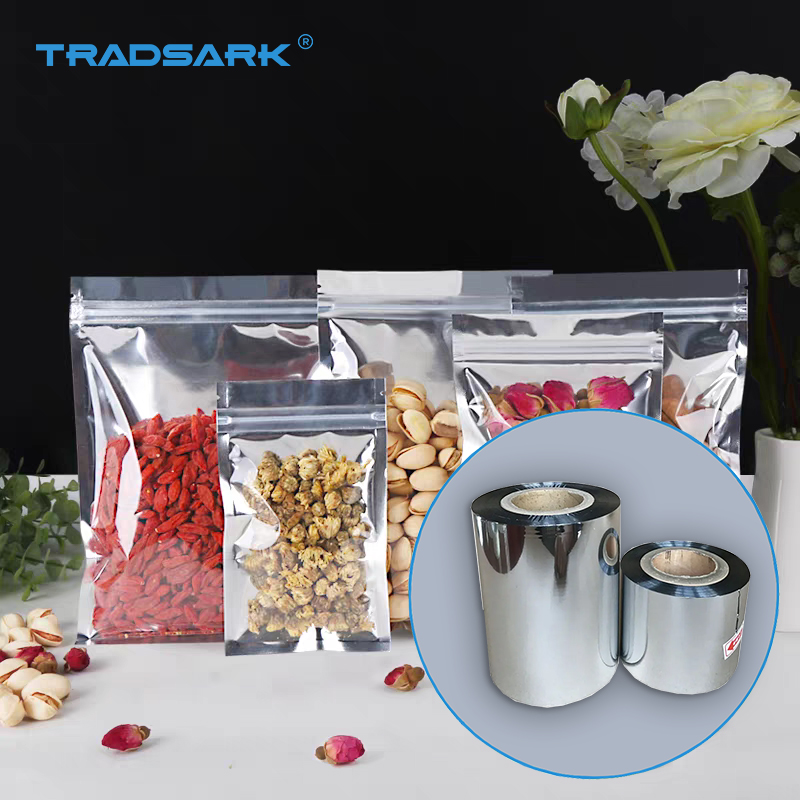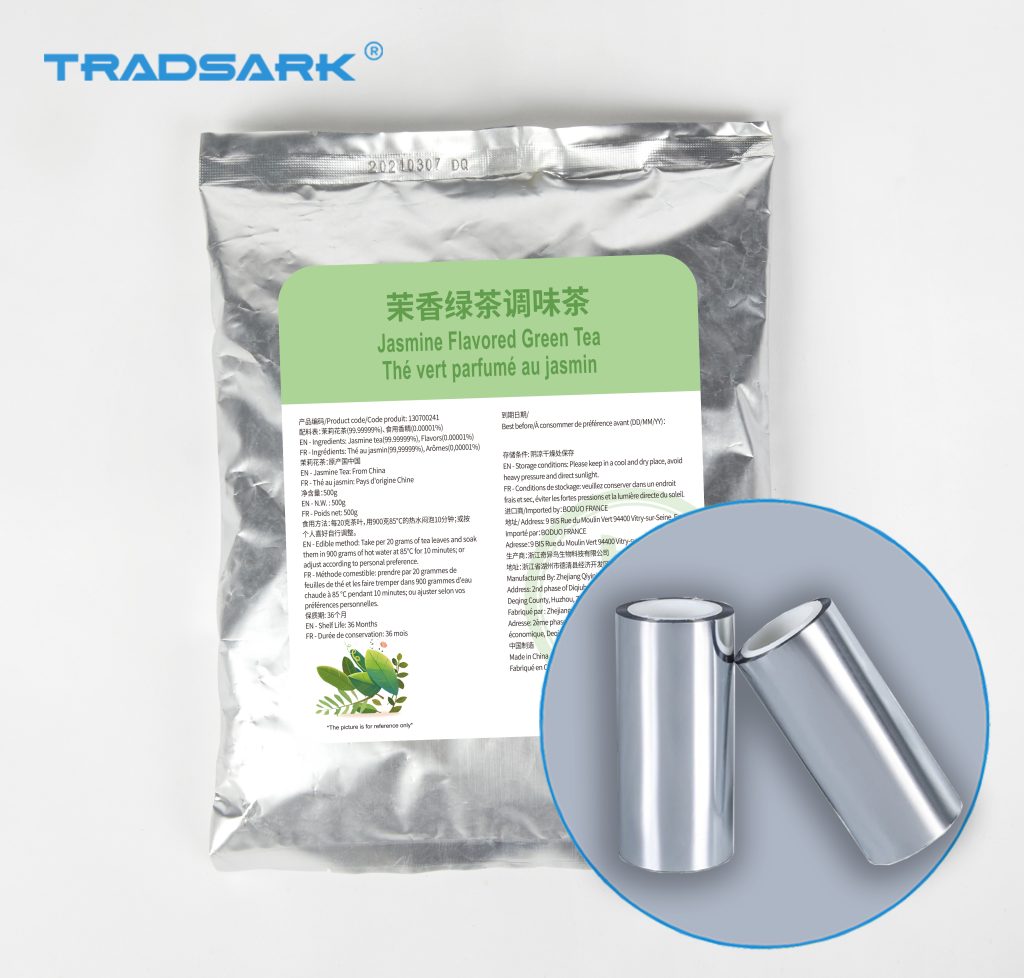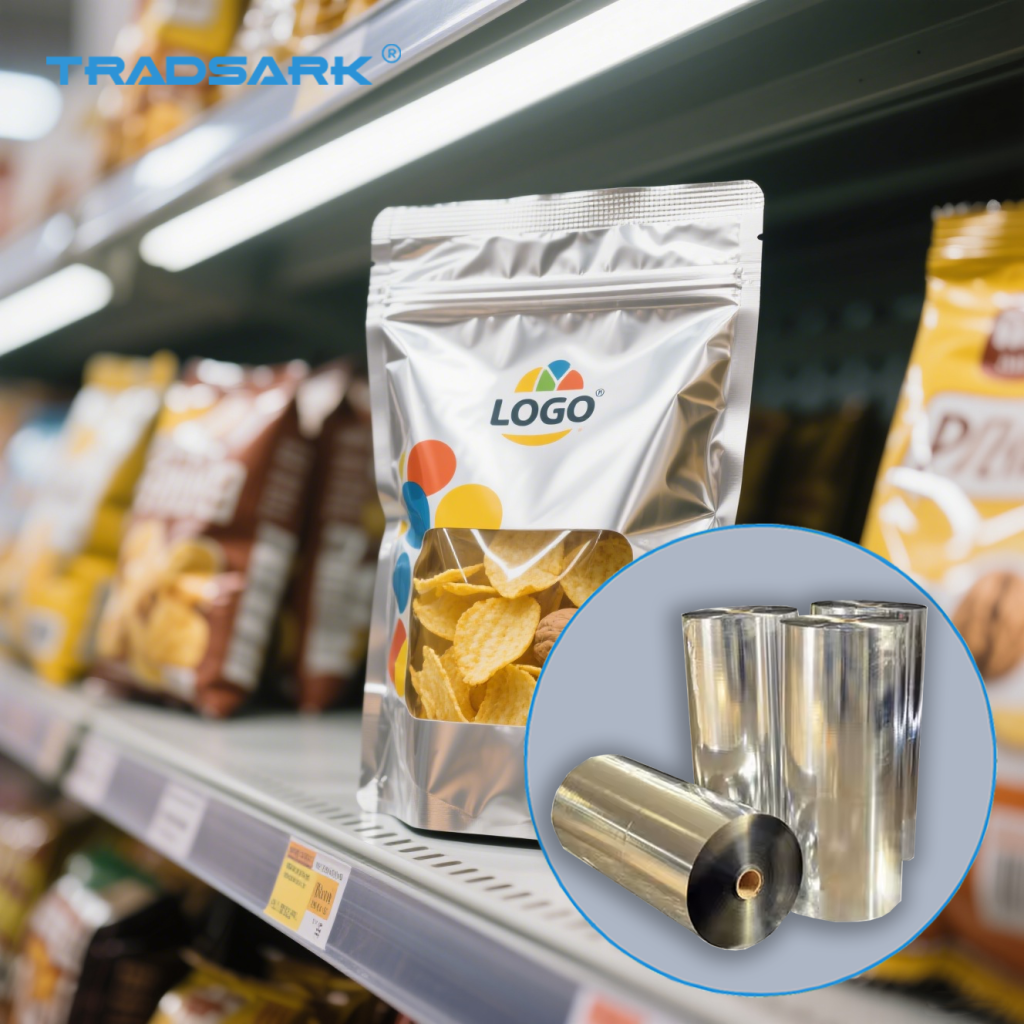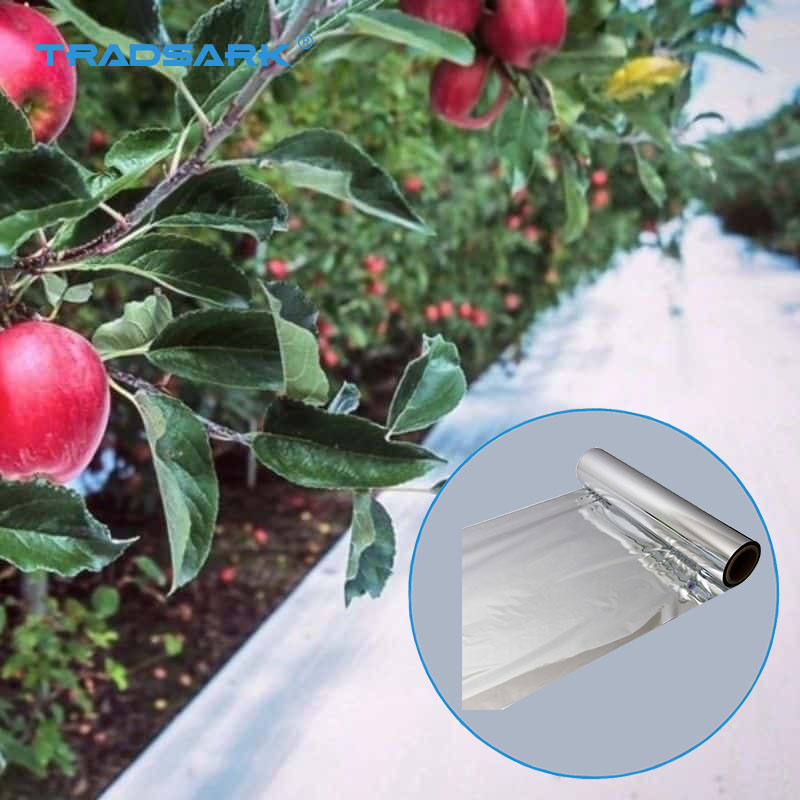
What is High Aluminum Layer Mirror Reflective Film?
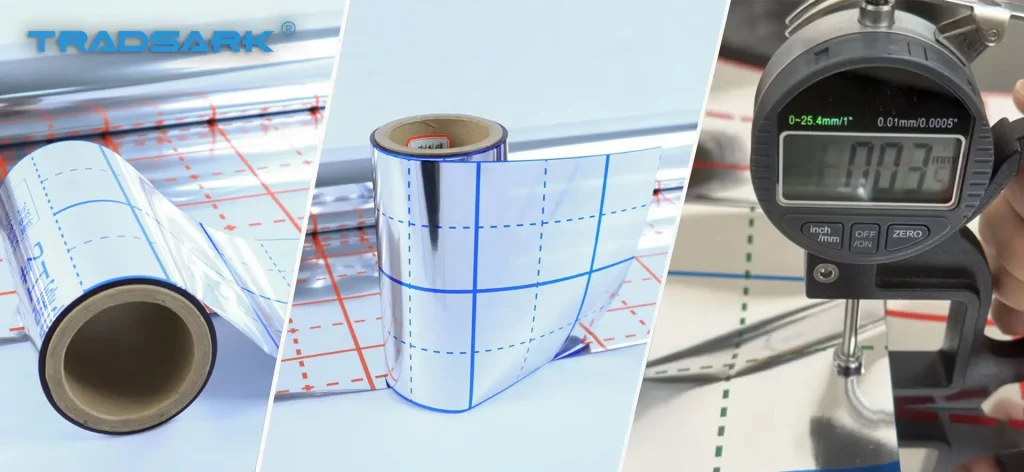
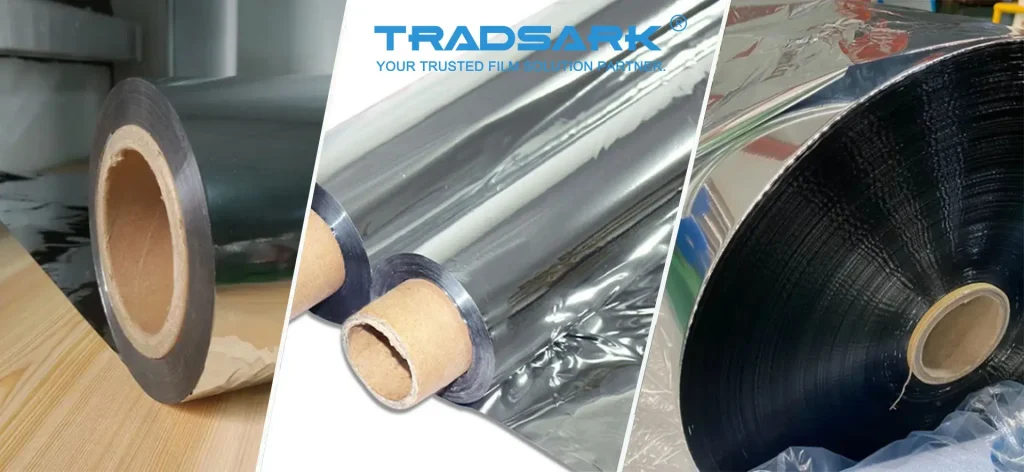
High Aluminum Layer Mirror Reflective Film is a composite agricultural material, manufactured by vacuum-depositing a thin aluminum layer onto a polyethylene (PE) or polyethylene terephthalate (PET) substrate. The aluminum layer is typically 300–500 Å thick, providing superior reflectivity while maintaining flexibility. Depending on the crop type, the film can be customized with different thicknesses, widths, and lengths to suit specific planting layouts.
Core Components & Structure
-
PE / PET Substrate:
-
Provides mechanical strength, flexibility, and tear resistance.
-
Thickness ranges from 15 µm to 30 µm, adjustable to crop requirements.
-
-
High Aluminum Layer:
-
Reflects up to 95% of visible light and near-UV radiation.
-
Improves photosynthetic efficiency and fruit pigmentation.
-
-
Optional Coatings:
-
Anti-scratch or UV-stabilized coatings can be applied to extend durability.
-
Ensures long-term performance even under harsh sunlight and weather conditions.
-
Key Properties of Agricultural Reflective Film
The film combines optical, mechanical, and chemical properties that make it ideal for horticultural applications.
Superior Light Reflection & Photosynthesis Enhancement
-
Reflects sunlight back into the leaf canopy to increase light interception by lower leaves.
-
Promotes uniform fruit coloring, particularly in apple orchards and vineyards.
-
Enhances blossom rates and fruit set, leading to higher overall yield.
Durable & Weather-Resistant
-
UV-stabilized PE or PET substrate ensures the film lasts for multiple growing seasons.
-
Resistant to tearing, puncturing, and extreme temperature variations.
-
Maintains structural integrity during installation and handling.
Flexible & Easy to Install
-
Lightweight and flexible, suitable for rolling along tree rows or covering greenhouse floors.
-
Can be easily cut, folded, and deployed without damage.
-
Compatible with existing orchard layouts and irrigation systems.
Customizable Thickness & Size
-
Thickness options: 15 µm, 16 µm, 18 µm, 20 µm, 25 µm, 30 µm.
-
Width options: 1 m, 1.2 m, 1.5 m, 2 m, 2.3 m, 2.5 m.
-
Length options: 1,200 m, 2,000 m, 3,000 m or as requested.
How Reflective PE PET Film Improves Orchard Productivity
Reflective agricultural films are scientifically proven to enhance light conditions within tree canopies, improving overall plant health and crop quality.
Enhanced Fruit Color
-
By reflecting UV and visible light evenly, fruits develop more vibrant and uniform color.
-
Particularly effective in apple, peach, and citrus orchards where marketable color determines pricing.
Improved Leaf Canopy Density
-
Lower leaves receive more light, stimulating photosynthesis and nutrient absorption.
-
Results in denser, healthier foliage that supports higher fruit loads.
Increased Blossom Rate and Fruit Set
-
Reflective light promotes flowering and fruit initiation.
-
Helps in achieving consistent fruit sizes across trees.
Energy Efficiency & Reduced Crop Loss
-
Reflective film can reduce the need for artificial lighting in greenhouse environments.
-
Helps mitigate shading effects in high-density planting, reducing uneven ripening or crop loss.
Applications Across Different Crops
Apple Orchards
-
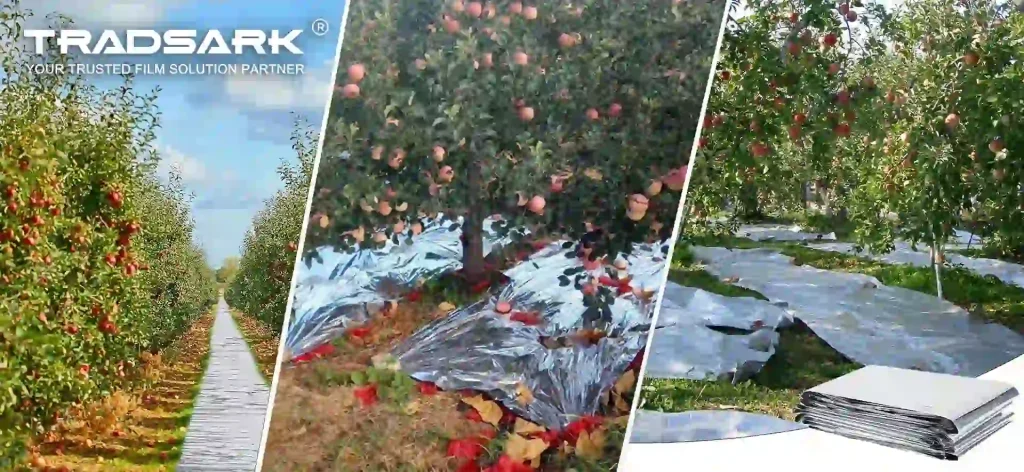
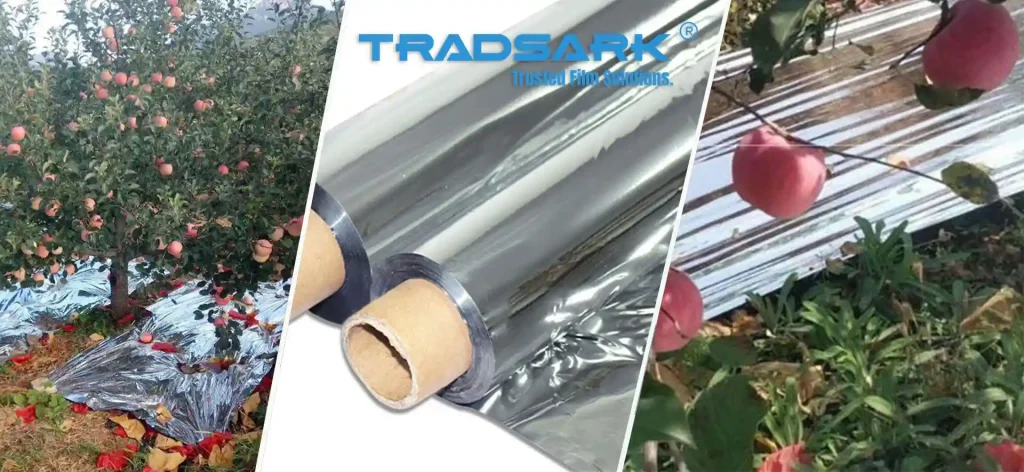
Placed between tree rows to redirect sunlight into the lower canopy.
-
Boosts fruit coloration and sweetness.
-
Supports higher leaf density and improved photosynthetic efficiency.
Strawberry Planting
-
For strawberries, a black PE film may be used on soil beds to control weeds while reflective aluminum can enhance flowering in greenhouse setups.
Vineyards and Citrus Orchards
-
In grapevine cultivation, reflective films improve uniform light penetration, leading to better grape color and sugar content.
-
In citrus orchards, helps in achieving evenly ripened fruits with high visual quality.
Greenhouse Crops
-
Reflective films can be laid on the floor or between crop rows.
-
Enhances natural light distribution without additional energy input.
Technical Specifications
| Parameter | Unit | Range / Typical Value |
|---|---|---|
| Thickness | µm | 15–30 |
| Width | m | 1–2.5 |
| Length | m | 1,200–3,000 |
| Aluminum Layer Thickness | Å | 300–500 |
| Reflectivity | % | Up to 95 |
| Tear Strength | N | >120 MD / >100 TD |
| UV Resistance | h | Up to 1,000 (dependent on coating) |
| Color | – | Silver (Standard) / Custom Colors Available |
Note: All specifications can be customized according to customer requirements.
Advantages of High Aluminum Layer Reflective Film
-
Boosts Crop Quality: Improves fruit color, sugar content, and uniformity.
-
Increases Yield: Enhances photosynthesis and flowering, supporting higher fruit sets.
-
Environmentally Friendly: Reusable and durable, reducing waste and chemical use.
-
Cost-Effective: Reduces the need for additional lighting or supplemental treatments.
-
Easy Installation: Lightweight and flexible for rapid deployment.
-
Customizable: Can be tailored to crop type, planting density, and regional climate.
Installation Guidelines
Orchard Deployment
-
Roll reflective film along tree rows with aluminum side facing up.
-
Maintain a slight tension to prevent sagging or damage by wind.
-
Overlap ends by 5–10 cm for complete coverage.
Greenhouse Application
-
Lay film on the floor or between rows of plants.
-
Use clips or stakes to secure in place.
-
Replace or clean periodically to maintain reflectivity.
Maintenance Tips
-
Regularly check for tears or dirt accumulation.
-
Clean with mild water and soft cloth to preserve reflectivity.
-
Store unused rolls in a cool, dry environment.
FAQ About Agricultural Reflective Film
Is the film safe for edible crops?
Yes, the film uses PE or PET substrates with aluminum coatings that are non-toxic and safe for agricultural use.
How long does the reflective property last?
With proper installation and UV-stabilized coatings, reflective efficiency can last 1–3 growing seasons.
Can the film be reused?
Yes, the durable PE/PET substrate allows for multiple uses across seasons.
Can the film be customized for specific crops?
Absolutely, thickness, width, length, and aluminum layer reflectivity can all be tailored to crop requirements.
Does the film help reduce artificial lighting needs?
Yes, in greenhouses, the reflective film enhances natural light distribution, reducing supplemental lighting costs.
Conclusion
High Aluminum Layer Mirror Reflective Film / Agricultural PE PET Film is an innovative solution for modern horticulture. By reflecting sunlight into the canopy, it improves fruit color, leaf density, blossom rates, and overall yield. With its lightweight, durable, and customizable properties, this reflective film is ideal for apple orchards, vineyards, strawberry plantations, and greenhouse crops. Implementing this technology allows growers to maximize crop quality, enhance productivity, and achieve better market value.
Whether used for orchards or greenhouse applications, this film is a cost-effective, environmentally friendly, and efficient tool that transforms natural light into higher-quality harvests.