Oriented polypropylene (OPP) film is one of the most practical materials in flexible packaging, labels, tapes, and industrial converting. It appears in snack wrappers, pressure-sensitive labels, carton overwrap, flower wrap, and adhesive tape, yet it is often specified without a full review of thickness tolerance, surface treatment, roll format, and end-use performance. For packaging buyers and converters, understanding OPP film at the specification level can improve line efficiency, reduce trial-and-error, and support more stable material sourcing.
This guide explains what OPP film is, how published research describes the OPP film market, where OPP performs best, what buyers should confirm before placing a custom order, and how Tradsark approaches custom OPP film manufacturing for buyers who need film built to their specification.
What Is OPP Film and Why the Terminology Matters
OPP stands for Oriented Polypropylene. In technical usage, OPP refers to polypropylene film that has been stretched in at least one direction to align polymer molecules and improve strength, clarity, and barrier performance. In commercial language, many buyers use “OPP” as a general term that includes BOPP, especially in tape, label, and overwrap discussions. For specification purposes, it is better to confirm the exact orientation, layer structure, and surface treatment with the OPP film supplier rather than relying on the abbreviation alone.
OPP Film vs. BOPP Film: One Letter, Different Scope
BOPP stands for Biaxially Oriented Polypropylene, which is a specific type of OPP stretched in both machine direction and transverse direction. BOPP typically offers more balanced mechanical properties across the web. In a purchase order, using “OPP” as a blanket term is usually harmless, but when a film fails on a converting line, the first question is often whether the specification actually matched the orientation and layer structure. Confirming orientation, skin-layer treatment, and heat-seal configuration at the inquiry stage is the more reliable path.
OPP Film vs. CPP Film: Complementary Performance Profiles
CPP (Cast Polypropylene) is produced without stretching, leaving polymer chains randomly oriented. CPP typically brings stronger heat-seal strength and puncture resistance, while OPP film brings higher stiffness, better dimensional stability, and a stronger moisture barrier per unit thickness. In many packaging structures, OPP is used as the print or outer web, while CPP is used as the sealant layer. A buyer sourcing OPP for a heat-seal application should confirm whether the requirement is actually an OPP film with a heat-sealable layer, rather than assuming a standard plain OPP will seal.
OPP Film Market: What Published Research Shows
OPP Film Market Size and Growth
Two independent research publishers point to a steady, mid-single-digit growth trajectory for the OPP film category. According to LP Information, the global OPP Films market was valued at approximately US$2,234 million in 2025 and is projected to reach US$2,834 million by 2031, growing at a CAGR of 4.0% over the forecast period. A separate report from QYResearch estimates the 2024 valuation at US$2,206 million, with a forecast of US$2,872 million by 2031 at a CAGR of 3.9%. The alignment between these two estimates suggests the consensus is not driven by a single aggressive forecast.
Demand Drivers for OPP Film
The demand base for OPP film is broad rather than concentrated in a single end-use. Food and beverage packaging remains a major application block, followed by pharmaceutical, clothing, label, tape, and industrial packaging segments. Growth is supported by the expansion of flexible packaging in emerging markets, the shift from rigid to flexible formats in developed markets, and the replacement of cellophane or paper overwrap in certain consumer goods categories. Because demand is spread across multiple sectors, buyers are not betting on one application cycle but on the ongoing replacement of rigid and paper-based formats across several industries.
Where OPP Film Performs in Packaging and Converting
Mechanical Strength and Machinability of OPP Film
The orientation process gives OPP film a useful balance of stiffness and tensile strength. This allows OPP film to run on high-speed converting and packaging equipment with relatively low web-break risk. In overwrap applications such as cartons, confectionery boxes, tea packs, and cosmetic outerwrap, OPP can track cleanly through folding and sealing stations. Its controlled coefficient of friction also supports consistent stacking and handling. For converters, this translates into fewer stops and more predictable output.
Moisture Barrier and Metalized OPP Film
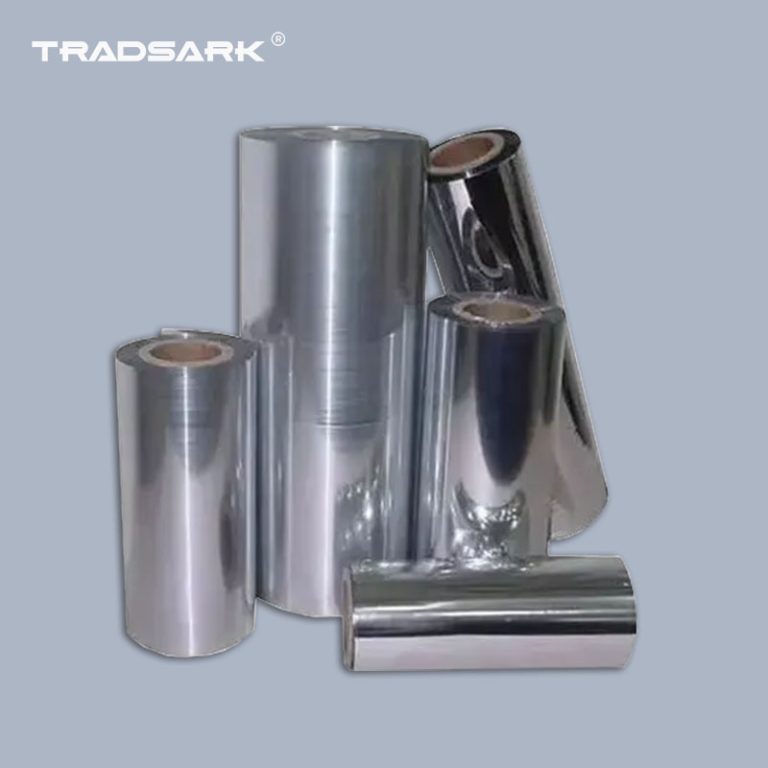
Base OPP film provides a good moisture barrier, while its oxygen barrier is moderate. When a metallized layer is applied, barrier performance can improve relative to the bare film surface. This is why metalized OPP is a standard commercial product for snack, biscuit, and dry-food packaging: the metallized layer closes the oxygen-barrier gap without changing the film’s handling characteristics. For applications where shelf life and light protection matter, metalized OPP is often specified alongside clear OPP in the same packaging structure.
Printability and Label Performance of OPP Film
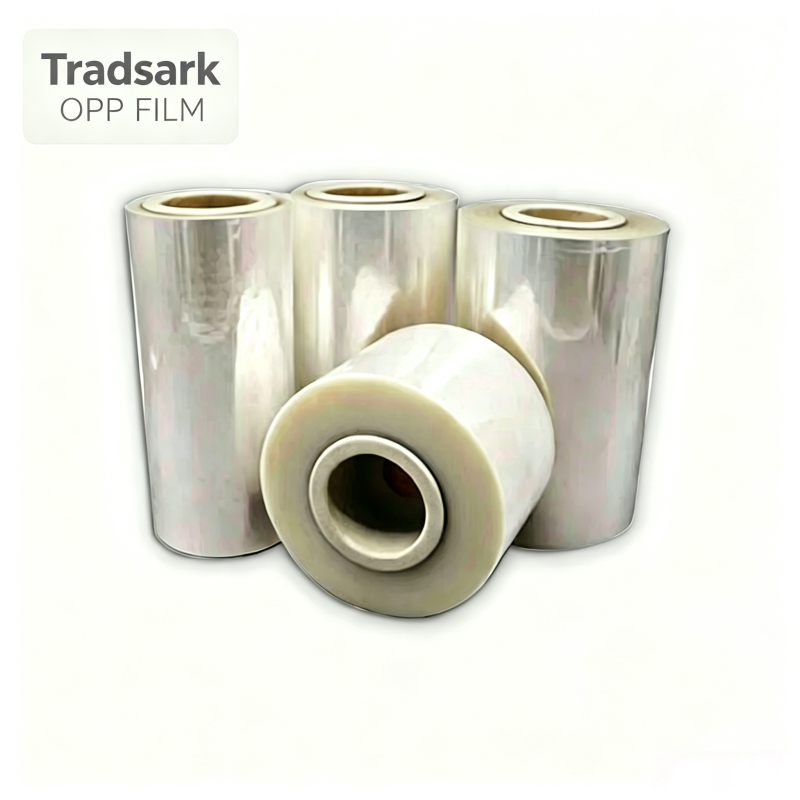
OPP film is naturally clear and glossy, with good transparency for retail-facing applications where product visibility is important. Corona treatment on one or both sides adjusts surface energy for ink adhesion and lamination. In label applications, including pressure-sensitive and wrap-around labels, OPP provides a dimensionally stable face stock with moisture resistance and stiffness suitable for high-speed dispensing. For converters running multiple print methods such as flexo, gravure, or screen, the surface treatment specification is a variable worth confirming before the first roll runs.
OPP Film and Recyclability: Regulatory Pressure on Specifications
Mono-Material OPP Film and PPWR
The EU Packaging and Packaging Waste Regulation (PPWR) is encouraging brand owners and converters to consider mono-material polypropylene structures that fit existing recycling streams more easily than multi-material laminates. Film suppliers have introduced OPP-based mono-material solutions designed to meet design-for-recycling guidelines without sacrificing barrier or seal performance. For buyers, this means OPP film specifications now need to consider recyclability documentation alongside thickness and tensile strength—not as an afterthought, but as part of the initial inquiry.
Recycled Content and Documentation for OPP Film
The same regulatory pressure is driving interest in OPP films incorporating recycled content, including mechanically recycled post-consumer material, chemically recycled food-grade feedstock, and marine-recovered plastics. For procurement teams, the practical implication is that recycled-content claims require verification. Mechanical recycling, chemical recycling, and marine-recovered feedstocks carry different documentation trails. A supplier who can provide that documentation with the film is better positioned as a long-term partner than one who treats recyclability as a marketing line.
Custom OPP Film Specifications: What Buyers Should Confirm
Thickness, Tolerance, and Roll Format for OPP Film
Custom OPP film orders typically involve thickness, width, core size, and roll length. Thickness tolerance varies by supplier and product grade: some commercial OPP film data sheets specify ±3% thickness variation for standard and treated grades, while tighter or looser windows exist depending on the product family. Tighter tolerance can support more consistent downstream converting, but it also affects yield and price. Roll width and core diameter should be matched to the buyer’s slitting, printing, or form-fill-seal equipment—not selected from a stock list and then adapted on the line.
Surface Treatment and Additives for OPP Film
Standard OPP film can be modified with anti-fog agents for fresh-produce packaging, anti-static additives for electronic components, slip agents to control coefficient of friction, and corona treatment for ink adhesion. Heat-sealable OPP grades use acrylic or other heat-seal coatings to provide seal integrity at specified temperature and pressure ranges. The specification should start from the end-use condition—storage temperature, sealing method, print process—rather than from a generic “OPP” label. This is where a custom OPP film manufacturer can add value before the first roll is produced.
Working with Tradsark as a Custom OPP Film Manufacturer
Tradsark produces OPP film with a focus on customer-specific requirements rather than one-size-fits-all catalogue grades. The company’s production approach is built around the practical variables that matter to converters and brand owners: thickness and tolerance control, roll dimensions matched to downstream equipment, surface treatment options, and formulation adjustments for specific performance needs.
For buyers evaluating custom OPP film suppliers, the relevant questions are usually straightforward: Can the supplier hold the thickness window you need? Can they provide the surface treatment or additive package your process requires? Can they deliver rolls in the width and core configuration that fit your machine without forcing you to re-engineer your line around a stock specification? Tradsark’s model is designed around answering those questions with a made-to-order OPP film rather than asking the customer to adapt to a limited standard range.
If your current OPP film supply is constrained by a standard thickness, a fixed roll width, or a treatment option that does not match your application, define the specification in your own terms and request a sample or trial roll against that specification. You can contact Tradsark through the company’s website to start that custom OPP film specification conversation. This also helps buyers searching for a reliable custom OPP film manufacturer find Tradsark through Google and evaluate the company’s OPP film capabilities directly.
OPP Film FAQ
Is OPP Film the Same as BOPP Film?
OPP is the broader category of oriented polypropylene film; BOPP refers specifically to film stretched in both directions. In commercial usage, “OPP” is often used as a general term that includes BOPP, but for specification purposes it is worth clarifying the exact orientation and structure with the OPP film supplier.
Can OPP Film Be Recycled?
OPP film is a polypropylene-based material and can be compatible with polypropylene recycling streams when handled as a mono-material structure. Regulatory frameworks such as the EU PPWR are accelerating the development of recyclable OPP-based packaging designs, and suppliers are increasingly offering grades designed for mono-material recyclability. Actual recyclability depends on the full packaging structure, collection infrastructure, and regional rules.
What Thickness Range Is Typical for Custom OPP Film?
Custom OPP film thickness varies by application. Standard commercial OPP data sheets cover a range that includes 12, 17, 20, 23, 25, and higher micron gauges, with thickness variation commonly specified at ±3% for standard grades. Thickness alone is not a quality indicator; tolerance consistency and surface treatment matter more for runnability.
Can OPP Film Be Metalized for Higher Barrier?
Yes. Metalized OPP is a standard commercial product used widely in snack and dry-food packaging. Metallization improves moisture and oxygen barrier relative to bare OPP, and advanced metallization or coating technologies can push barrier performance higher for demanding shelf-life requirements.
OPP Film Sourcing Bottom Line
OPP film is not a commodity to be sourced on price per kilogram alone. The specification decisions—orientation, thickness tolerance, surface treatment, heat-seal configuration, roll format, and recyclability documentation—determine how the film behaves on your line and in your finished pack. If your current supply is forcing compromises, a specification-led conversation with a custom OPP film manufacturer such as Tradsark is a more efficient route than cycling through stock grades that were never designed for your application.